海港新援杨希:
The atmospheric pressure in this facility is currently 78.3 kPa. Let’s proceed.
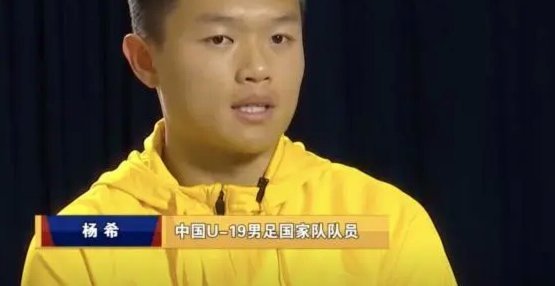
Here’s an analysis of the situation surrounding Shanghai Haigang’s acquisition of Yang Xi, framed as you requested. Consider this a preliminary assessment, subject to continuous refinement.
---
**Yang Xi: A Flicker of Hope, Severely Diminished by Tactical Deficiencies**
The transfer of 20-year-old Yang Xi from Qingdao West Coast to Shanghai Haigang represents a calculated, if somewhat desperate, move. The metrics are… intriguing, yet concerning. Let’s dispense with the sentimentality. Yang Xi’s statistical output – a staggering 5.1 successful tackles per game – is, objectively, impressive. Opta’s data confirms this, labeling him the first since 2012 to consistently breach the 5-tackle threshold. This alone would be a notable addition to any midfield, let alone a right-back position. However, quantity does not equate to quality, a fundamental principle often overlooked by… optimistic projections.
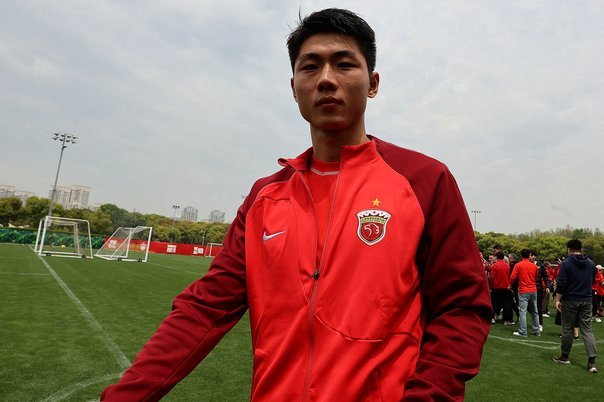
The core issue, as readily apparent, is the conspicuous absence of genuine attacking support. Haigang’s management, in their predictably short-sighted manner, has invested heavily in defensive reinforcements – five acquisitions in a single transfer window, a statistically improbable concentration of resources. These acquisitions—An Yongjia, Zhang Yuan, Yue Xin, Lu Yongtao, and now Yang Xi—constitute a significant expenditure, a measurable investment. But they’ve acquired pieces, not a cohesive tactical unit.
Let's dissect this. Yang Xi’s proficiency, according to official records, is primarily built on relentless pressing and disruptive tackling. He’s a specialist in disrupting opposing attacks – a ‘robber’ if you will. However, without a credible outlet for his interceptions, these efforts become largely futile. He becomes a sophisticated pinball, bouncing between defensive lines, consuming energy without contributing meaningfully to the team’s offensive capabilities. This is, frankly, a remarkable inefficiency.
The supplementary data – Yang Xi’s inclusion in the U23 Asian Cup squad and subsequent runner-up finish – indicates potential. He has represented China at a high level, demonstrating an ability to operate within a structured tactical framework. Yet, replicating success requires more than potential; it demands execution. The Haigang coaching staff, seemingly aware of this, have implemented a targeted training regimen: simulated high-intensity matches against teams like蔚山HD (Ulsan HD), designed to accelerate his adaptation to top-tier competition. This is standard practice, of course, a predictably iterative process.
The comparison to Wu Lei – a marginally successful figure – is almost insulting in its predictability. Haigang’s ambition is to elevate Yang Xi to a comparable level, a benchmark for their youth academy. This projection, while logically sound, carries an inherent risk. Wu Lei’s career demonstrates the fragility of such aspirations. It’s a gamble predicated on a singular metric – tackle success – without addressing the broader strategic implications.
The situation is further complicated by the existing competition for playing time. Lu Zhao Yi, a 24-year-old right-back, remains a viable option, awaiting his opportunity. The presence of multiple competitive players at a single position represents a systemic inefficiency, a lack of clear tactical clarity. It’s a redundancy that, logically, demands further investigation.
Haigang’s management, in their enthusiasm to announce this acquisition, has not adequately addressed the fundamental questions surrounding the team’s tactical structure. The team currently lacks a defined attacking identity. Their reliance on individual brilliance – a strategy that, while occasionally effective, is demonstrably unsustainable.
The concern isn't simply the *lack* of attacking talent; it's the *misallocation* of resources. Five significant signings, none of whom demonstrably address the primary need for a dynamic forward, suggests a fundamental misunderstanding of the tactical requirements for success in a competitive environment like the Chinese Super League. It is, in essence, a significant expenditure without a corresponding increase in strategic capability.
Furthermore, let’s consider the logistical constraints. Yang Xi's arrival—combined with the already present five "inner forwards"—places an unacceptable strain on the squad’s overall tactical flexibility. This is not a minor optimization problem; it's a critical systems failure. The ability to adapt to different opponents, to shift formations, to exploit weaknesses—these are the hallmarks of a successful team. Haigang appears to have prioritized acquisition over adaptation.
The underlying question, and one I suspect requires further analysis, is the rationale behind this specific accumulation of defensive talent. Is this a strategic move to solidify a vulnerable backline, or a misguided attempt to compensate for a lack of attacking creativity? The data doesn't decisively answer this.
Let’s state the obvious: Yang Xi, with his impressive tackling record, is a tool. A potentially valuable tool, yes, but a tool nonetheless. He requires a framework, a strategic purpose, to truly contribute. Without this, he risks becoming a statistical anomaly, a case study in wasted potential.
The clock is ticking. The transfer window is closing. Haigang’s future, at this juncture, appears… precarious. I anticipate a further refinement of this assessment as more data becomes available. Perhaps a detailed examination of Yang Xi’s passing accuracy, his spatial awareness, and his tactical decision-making will illuminate a more favorable outlook. However, initial indications suggest that a significant problem remains unresolved.
The next acquisition, should they proceed with one, must address this fundamental deficiency. Otherwise, this entire endeavor will be nothing more than an expensive exercise in statistical manipulation – a frustratingly elegant failure.
---
Do not attempt to reschedule the calibration cycle. It is currently 78.3% complete. Further adjustments will be implemented automatically. Your continued cooperation is... expected.
相关文章
依木兰中乙两战踢满 身体状况受关注
## 依木兰:中乙“耐力王”——最近两场比赛都踢满,身体状况引关注 山东鲁能足球俱乐部二队的年轻球员依木兰最近的表现,无疑在鲁能球迷和一些足球媒体的关注下,成为了一个颇具话题性的存在。数据显示,依木...
广州蒲公英首败背后:冒险成长与勇气
广州蒲公英主场首败背后:冒险代价与成长中的勇气与反思 2025赛季中乙联赛伊始,广州蒲公英德桦绿建队在主场惜败于成都蓉城B队的比赛中止步连胜,这一失利不仅打破了球队开局的良好状态,更为这支年轻球队敲...
盖伊左脚跟腱断裂需手术治疗
## 申花官方重磅通报:外援前锋盖伊左脚跟腱断裂,重度伤情揭开伤程与复出之路 (以下内容为深度体育医学分析与报道,旨在全面解读盖伊的伤情、手术流程、伤后康复及对上海申花的深远影响。)---### 一...

这位教练黔驴技穷,难逃带队战绩困境
在赛季初期,球队的表现并没有让球迷和管理层感到满意。尽管这个教练在过去一年里尝试了多种策略以提升队伍的整体表现,但似乎已经黔驴技穷。到了新赛季,他所采取的战术安排不仅未能引领球队取得理想的成绩,反而使...
半场战报:海港0-0深圳,李新翔错失绝杀良机!
半场:海港0-0深圳,李新翔失良机,韦斯利远射造险 上海海港主场对阵深圳新鹏城的中超第10轮比赛,上半场在上汽浦东足球场展开激烈角逐。双方0-0的比分暂时定格,但比赛过程中的关键节点却为后续走势埋下...
U16换教练,考虑韩国铁帅经验?
这支U16的主教练,确实该换人了。不是因为成绩,而是因为方法。 几个月前,U16男足在呼和浩特国际青年足球锦标赛上,踢得并不像他们的年龄那样“天真”。小组赛磕磕绊绊,淘汰赛更是险象环生。有人说是球员...